The short answer
Lobbying is any organized effort to influence decisions by government officials, such as members of Congress or federal regulators. It is protected by the First Amendment's right to petition, and paid federal lobbyists must register and file quarterly reports under the Lobbying Disclosure Act of 1995. It is separate from campaign donations, which the FEC regulates.
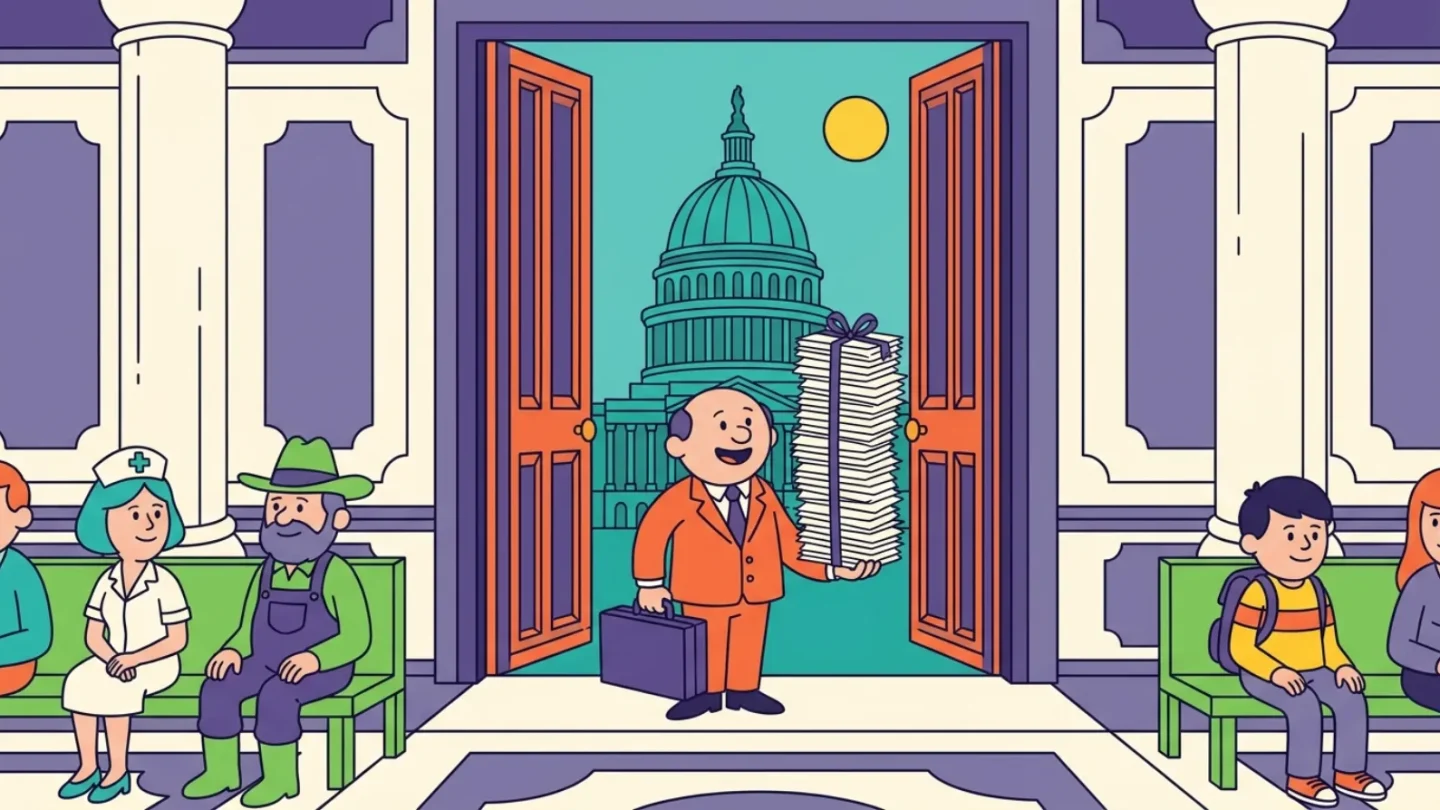
In 2025, organizations reported spending a record $5.08 billion on federal lobbying, according to OpenSecrets’ tally of the disclosure reports filed with Congress. That is about $9.5 million for every member of the House and Senate. Congress, it turns out, gets a lot of visitors.
The money pays for something older than the Capitol dome: people asking government to act, or to stop acting. Lobbying is how companies, unions, charities, cities, universities and individual citizens try to influence laws and rules. Here are the questions people ask most, answered with what federal law says, as of October 2026.
What is lobbying in simple terms?
Lobbying is any organized attempt to influence legislation or other government action. The targets are usually legislators and their staff, in Congress or in state legislatures, or the agency officials who write regulations. The word comes from the lobbies outside legislative chambers, where petitioners waited to catch lawmakers on their way in.
Lobbyists are the people who do the asking, either for a paying client or as an employee of the organization they represent. Lobbyists work for oil companies and environmental groups, for hospitals and patient advocates, for tech firms and small farmers. A school district pushing for education funding is lobbying, and so are interest groups on both sides of the gun debate.
Is lobbying legal in the United States?
Yes, and the protection starts in the Constitution. The First Amendment bars Congress from abridging “the right of the people peaceably to assemble, and to petition the Government for a redress of grievances.” Asking your representatives to change a policy is that petition, whether you write a letter or hire a lobbying firm.
Federal law regulates disclosure, not the right itself. Bribery, meaning money or favors handed over in exchange for an official act, is a crime. Lobbying is political persuasion done in the open, at least in theory, with paperwork attached.
What do lobbyists actually do?
The job involves fewer cigars and more spreadsheets than the movies suggest. Congress has thousands of bills in play and limited staff, so lobbyists supply research, data, draft language and a clear account of how proposed legislation would affect their industry or cause.
Typical lobbying activities include:
- Meetings with members of Congress, committee staff and agency officials
- Testimony at hearings and public comments during federal rulemaking
- Drafting bill text or amendments that a friendly office might introduce
- Tracking legislation as it moves through committees and floor votes
- Building coalitions with other interest groups that want the same result
Lobbyists do much of this early, while legislation is still being written. Our guide to how a bill becomes a law shows each stage where lobbyists can push.

What is the difference between direct and grassroots lobbying?
Direct lobbying is contact with officials themselves: the meeting, the phone call, the email to a committee staffer. Grassroots lobbying works through the public. An interest group urges its members or the general public to call, write or show up, shaping public opinion so legislators feel pressure from voters back home.
| Direct lobbying | Grassroots lobbying | |
|---|---|---|
| Who talks to officials | The lobbyist | Members of the public |
| Typical tools | Meetings, calls, briefings, draft text | Ads, email alerts, petitions, call-in days |
| Federal disclosure | Covered by the Lobbying Disclosure Act | Mostly not counted as a “lobbying contact” |
| Strength | Detailed expertise | Shows lawmakers that voters care |
Grassroots campaigns can be genuine or manufactured. Critics use the word “astroturf” for campaigns that look homegrown but are funded by a single company or special interest.
Who has to register as a lobbyist?
The main federal law is the Lobbying Disclosure Act of 1995 (Public Law 104-65), signed on December 19, 1995. It covers lobbying of Congress and the executive branch. Lobbying of state legislatures and local governments falls under state laws.
Under the Act, a person is a lobbyist if they are paid to lobby, make more than one lobbying contact, and spend at least 20 percent of their time on lobbying activities for a client in a three-month period. The law requires the employer or lobbying firm to register within 45 days of the first contact. After that, it must file:
- A registration (LD-1) naming the client and the issues lobbied.
- A quarterly report (LD-2) on the issues, bills, agencies contacted and money spent, due April 20, July 20, October 20 and January 20.
- A semiannual contribution report (LD-203) listing certain political contributions by the registrant and its lobbyists.
Small players are exempt from federal registration. Under thresholds in effect since January 1, 2025, a firm does not register for a client that pays it $3,500 or less in a quarter, and an organization with in-house lobbyists is exempt while its lobbying expenses stay at $16,000 or less, according to the Clerk of the House of Representatives. Knowingly breaking the rules can bring a civil fine of up to $200,000; corrupt violations can mean up to five years in prison.
The Honest Leadership and Open Government Act of 2007 tightened the system after the Jack Abramoff scandal. It requires firms to file quarterly instead of twice a year and to file electronically. It also created the contribution reports, raised the fines and restricted gifts from lobbyists to members of Congress.
What is the revolving door in lobbying?
The revolving door is the movement of people between government jobs and lobbying firms, in both directions. A former congressional staffer who wrote tax legislation becomes a tax lobbyist, or a lobbyist joins an agency that regulates their old industry.
Federal law slows the door:
- Former senators may not lobby Congress for 2 years after leaving office (extended from 1 year by the 2007 law).
- Former members of the House of Representatives face a 1-year ban on lobbying Congress.
- Senior congressional staff have a 1-year cooling-off period for contacts with their former office or chamber.
Supporters say former officials who become lobbyists bring real expertise about how government works. Critics argue that clients of lobbying firms are buying access and personal relationships more than arguments. To see how many offices and committees a lobbyist can work, read our explainer on how Congress works.
Is lobbying the same as campaign contributions?
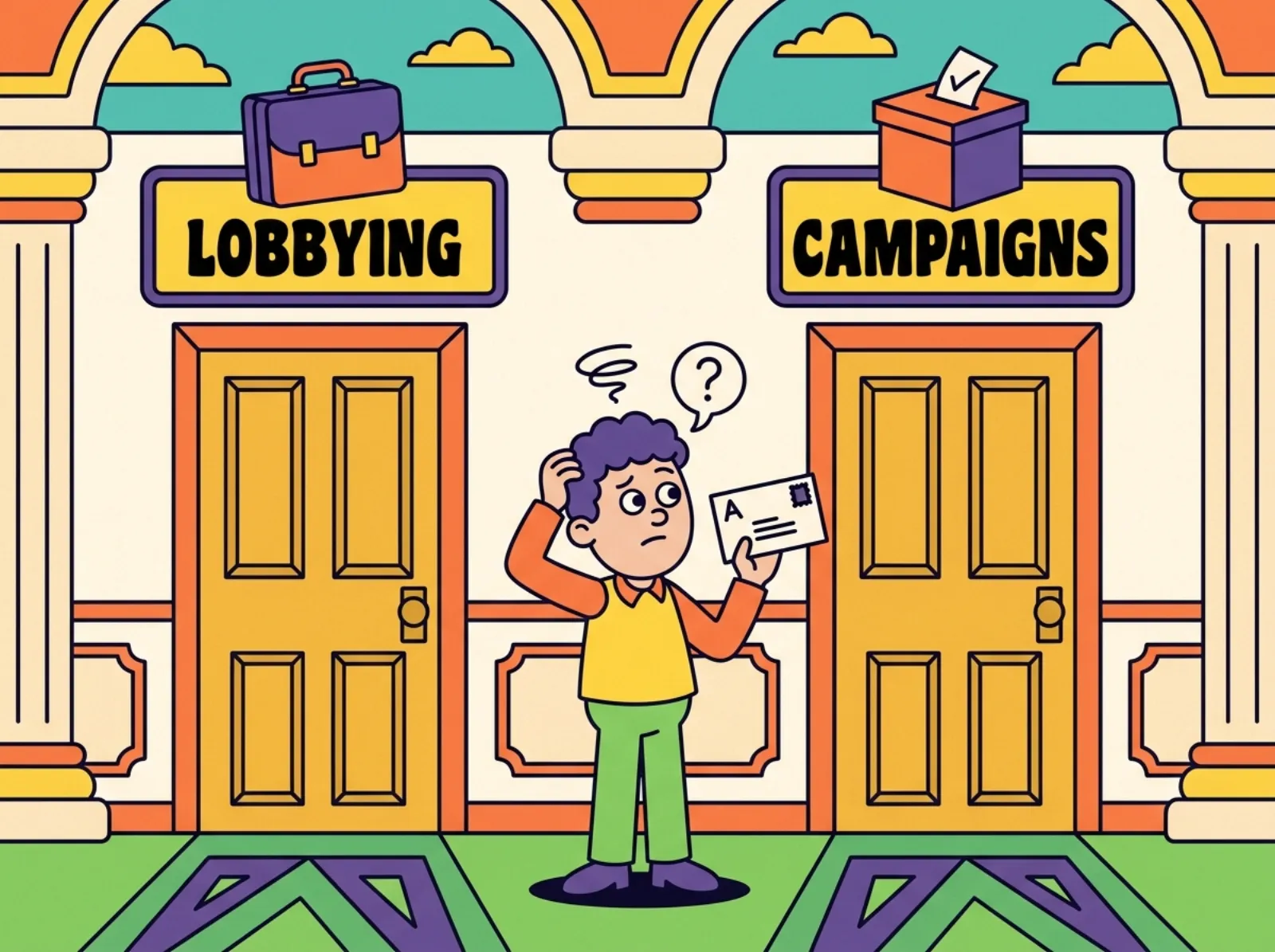
No, though the two often travel together. Lobbying is persuasion about policy. Campaign contributions are money given to help someone win an election, and they fall under the Federal Election Commission, not the lobbying disclosure system.
The limits differ sharply. For 2025-2026, an individual can give a federal candidate $3,500 per election. Super PACs, which spend independently and may not coordinate with candidates, can accept unlimited contributions, including from corporations and unions. That rule dates to 2010, after the Supreme Court’s Citizens United decision; our guide to how the Supreme Court works explains how rulings like that become national law. Lobbyists who give personal contributions must list many of them on their LD-203 reports.
Is lobbying good or bad for democracy?
Both sides make serious arguments.
The case for lobbying
- It is a constitutional right, used by every kind of interest group, from the Chamber of Commerce to the Sierra Club.
- Policymakers get detailed information on legislation they could not produce alone.
- Public disclosure reports let anyone see which lobbyists are working on which bill.
The case against lobbying
- Interest groups with the most money can hire the most lobbyists and firms, and gain the most access.
- The revolving door blurs the line between public service and private interest.
- Grassroots and “shadow” lobbying below the registration thresholds stays largely invisible.
Most reform debates sit between those poles: longer cooling-off periods, lower registration thresholds, broader rules for grassroots campaigns. Few people argue for banning lobbying outright, because the same right protects a billion-dollar trade group and a parent writing to a senator about her kid’s school.
Quick facts about lobbying
- Spending: $5.08 billion on federal lobbying in 2025, a record (OpenSecrets).
- Legal basis: the First Amendment’s right to petition the government.
- Main law: the Lobbying Disclosure Act of 1995, tightened in 2007.
- Reports: filed with the Secretary of the Senate and the Clerk of the House, searchable by the public.
- Not lobbying: campaign donations, which the FEC regulates.